Trademark Status Search: How to Check Your Trademark Application Online in India (2026)
Once you have filed a trademark application in India, the natural next question is: what is happening to it now? Trademark registration is not instant. Your application passes through several government stages over many months, and at each stage the Registry may take an action that needs your response. Checking your trademark status regularly is the only reliable way to catch an examination report, an advertisement window, or an opposition before a deadline lapses. This guide explains how to check your trademark application online in India in 2026, what each status means, and what to do at every stage.
Why You Should Check Your Trademark Status
The trademark journey from filing to registration is deadline-driven, and most deadlines run against you the moment the Registry acts, whether or not you have noticed. A few practical reasons to check your status regularly:
- Examination reports carry a 30-day reply window. If an examiner raises objections and you do not respond within one month, your application can be treated as abandoned.
- Advertisement in the Trade Marks Journal starts a four-month opposition clock. You want to know the moment your mark is published.
- Oppositions and hearing notices are time-bound. Missing a counter-statement deadline can end your application.
- Renewal falls due every 10 years. Tracking status helps you avoid an inadvertent lapse.
In short, the status page is your early-warning system, and checking it takes only a few minutes.
Where to Check: The IP India Portal
All Indian trademark data is maintained by the Office of the Controller General of Patents, Designs and Trade Marks (CGPDTM) and is publicly searchable at the official IP India website, ipindiaonline.gov.in. There are two distinct tools you should know about:
- Trademark Application/Registered Mark status (often called the e-Register): use this when you already have an application number and want to track a specific mark.
- Public Search of Trade Marks: use this before filing to check whether a similar mark already exists, through a Wordmark, Phonetic, or Vienna Code search.
Both are free, and only the official portal shows live, authoritative data.
Step-by-Step: Check Status by Application Number
Follow these steps to track a specific trademark:
- Step 1: Go to ipindiaonline.gov.in and open the Trade Marks section, then choose “Trade Mark Application/Registered Mark” under the online status option.
- Step 2: Select the “National/IRDI Number” option and enter your trademark application number (for example, a 7 or 8 digit number issued at filing).
- Step 3: Enter the captcha code shown on screen and click “View”.
- Step 4: The status page displays the current status, the class, the applicant name, the date of application, the associated agent or attorney, and a full history of actions taken.
- Step 5: Download or note the examination report, journal number, or any documents linked on the page. If an action is pending from your side, act on it before the deadline.
Keep your application number safe; it is the key to every future status check, reply, and renewal.
Common Trademark Status Meanings
The status label tells you exactly where your mark sits in the pipeline. Here is what the common ones mean and what you should do.
| Status | What it means | What to do |
|---|---|---|
| New Application | Application filed and received; data entry in progress. | Wait; ensure fees and forms are complete. |
| Formalities Chk Pass | Basic formalities (power of attorney, translations, priority documents) are in order. | Nothing; awaits examination. |
| Formalities Chk Fail | A formal defect was found, such as a missing document or user affidavit. | Cure the defect promptly by filing the required document. |
| Marked for Exam | The application is queued with an examiner. | Wait for the examination report. |
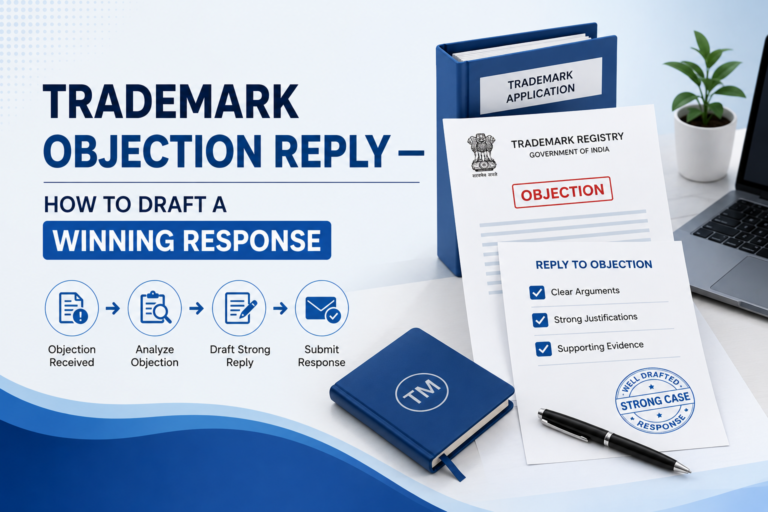
| Objected | The examiner has issued an examination report raising objections (usually under Sections 9 or 11). | File a reply within 30 days; a hearing may follow. |
| Advertised / Accepted and Advertised | The mark cleared examination and is published in the Trade Marks Journal. | Monitor for opposition during the four-month window. |
| Opposed | A third party has filed a notice of opposition. | File a counter-statement within two months and contest. |
| Registered | The mark is registered; you receive the registration certificate. | Use the (R) symbol; diarise renewal in 10 years. |
| Abandoned | A deadline (often the exam reply) was missed. | Seek restoration if within time, or re-file. |
| Renewal / Due for Renewal | The 10-year term is ending. | File renewal on Form TM-R before expiry. |
Status Check vs Pre-Filing Public Search
These two tools are often confused, but they serve opposite purposes:
- A status check looks up one mark you have already filed, using its application number, to track its progress.
- A pre-filing public search scans the entire register before you file, to see whether an identical or deceptively similar mark already exists. This is where you use the Wordmark search (matching the text of the brand name across classes) and the Vienna Code search (matching the figurative or device elements of a logo using the international Vienna Classification).
A thorough public search reduces the risk of objection and opposition, and it should always be done before filing. Getting the search and classification right at the outset is where professional help pays for itself; TAXAJ offers end-to-end TAXAJ’s trademark registration service covering search, filing, and prosecution.
Typical Timeline of Trademark Registration
Assuming no objections or oppositions, a smooth application in 2026 usually moves as follows. Delays are common, so treat these as indicative, not guaranteed.
| Stage | Indicative timeline |
|---|---|
| Filing and TM allotment number | Same day |
| Formalities check | 1 to 2 weeks |
| Examination report | 1 to 6 months |
| Reply to objection / show-cause hearing | Within 30 days of report |
| Advertisement in Journal | 2 to 6 months after acceptance |
| Opposition window | 4 months from advertisement |
| Registration certificate | Roughly 8 to 18 months if unopposed |
What to Do at Each Stage
At the Objected stage: read the examination report carefully. Objections typically arise under Section 9 (the mark lacks distinctiveness) or Section 11 (it conflicts with an existing mark). File a written reply with supporting evidence of use and legal arguments within 30 days. If the examiner is not satisfied, you will receive a show-cause hearing notice; attend it or appoint an agent to appear.
At the Advertised stage: your work is mostly monitoring. Watch the four-month opposition window closely; if it passes without opposition, registration follows.
At the Opposed stage: respond decisively. File your counter-statement within two months of receiving the notice of opposition, then exchange evidence and attend the hearing. Ignoring an opposition leads to deemed abandonment.
At Registration: collect your certificate, begin using the (R) symbol, and calendar the 10-year renewal so protection never lapses.
Frequently Asked Questions
Is checking trademark status on the IP India portal free?
Yes. Both the application status lookup and the public search on ipindiaonline.gov.in are completely free. You only pay government fees at the filing and renewal stages.
How often should I check my trademark status?
At least once a month is sensible, and more frequently once your mark is advertised or if an examination report is expected. Timely checks help you catch 30-day and opposition deadlines.
What does “Objected” mean and is my trademark rejected?
No. “Objected” means the examiner has raised concerns in an examination report, not that your mark is refused. You have the right to reply within 30 days and argue your case; many objected marks proceed to registration after a strong reply.
My status shows “Abandoned”. Can I recover the application?
Possibly. Abandonment usually follows a missed deadline. Depending on the circumstances and timing, you may seek restoration or review; otherwise you can file a fresh application. Act quickly and consider professional advice.
How long does trademark registration take in India in 2026?
An unopposed application without serious objections typically takes about 8 to 18 months from filing to registration. Objections, hearings, and oppositions can extend this significantly.